Why the social crypto platform sees games as a cornerstone of long-term utility
Gaming is becoming a central pillar of Pi Network’s growth strategy. As the social-first crypto platform continues to expand, games are emerging as a high-impact way to attract users, highlight real-world utility, and demonstrate how its ecosystem tools can work together seamlessly.
Pi Network already supports millions of verified users, known as Pioneers, who interact daily through a growing set of applications. With identity verification, built-in engagement, and platform-level monetization tools, Pi offers an environment that’s well-suited to the way games are played and shared.
The mechanics of gaming naturally align with how Pi is structured. Players are used to interacting socially, engaging for long stretches, and spending or earning virtual assets. Pi supports those same behaviors through its wallet, attention-based monetization tools, and community-driven platform.
Unlike many blockchain projects that rely on speculation, Pi focuses on building real utility. Games offer an ideal testing ground for that utility. Developers can build fun, lightweight games while tapping into Pi’s existing infrastructure and user base. This creates a self-contained system where developers bring the experience, and Pi brings the audience, the tools, and the economic model.
Pi Network Ventures is actively supporting this direction. The team is seeking out projects that incorporate Pi into the gameplay experience, whether through in-game purchases, community challenges, or social incentives. These games are designed to create value at both the app level and the platform level, pulling in users while demonstrating what Pi can enable behind the scenes.
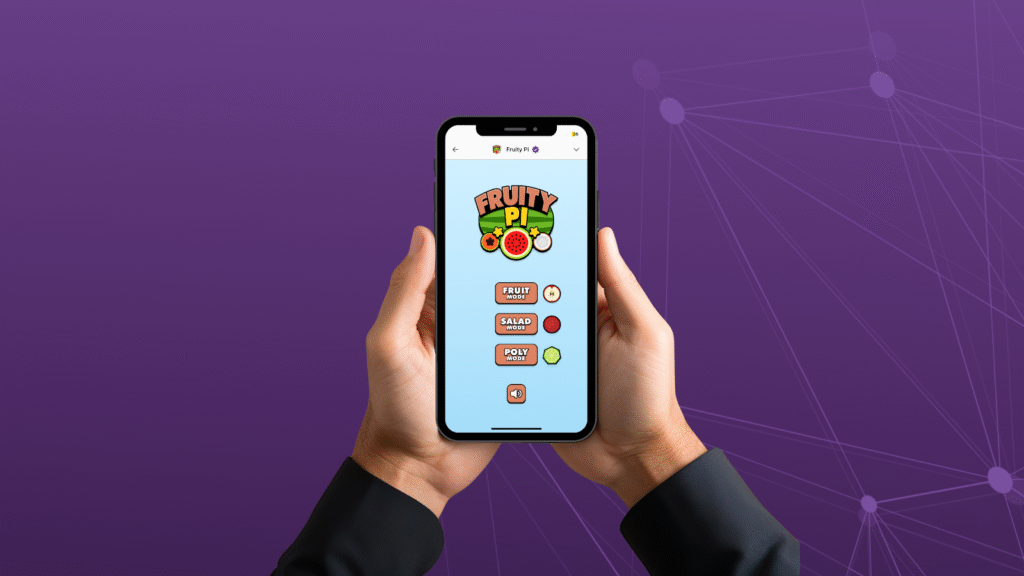
FruityPi is the first public example of this model in action. It’s a simple fruit-merging puzzle game available through the Pi Browser. Players drop fruit into a bin and try to create higher-value combinations while managing limited space. On the surface, it’s easy to pick up and play. Under the hood, it’s deeply connected to Pi’s ecosystem.
The game allows players to use Pi to progress faster or boost their scores, integrating the currency directly into the game loop. It also features ads from the Pi Ad Network, showing how platform-level monetization tools can support independent apps. Everything runs through Pi, from login to engagement to rewards, offering a complete demo of what’s possible when games are fully integrated with the ecosystem.
More importantly, FruityPi shows developers what’s already built. The tools are in place. The users are active. The monetization is baked in. Developers don’t have to build a business model from scratch. They just need to make something worth playing.
Gaming is one of the most promising categories within the Pi ecosystem. It brings in users, encourages repeat engagement, and creates visible value for developers and the community. That’s why Pi Network Ventures is continuing to scout for games that match the ecosystem’s strengths and goals.
For developers, the opportunity is straightforward. Build a great game, integrate Pi tools, and connect with a growing, active community. If the game gains traction, there’s potential for additional support from the Pi team and its venture arm.
FruityPi is a starting point, not the finish line. It shows that Pi isn’t just an idea or a network. It’s a platform ready to power real applications. And gaming, with its built-in dynamics and digital behaviors, may be the most natural place to start.





Lorem ipsum dolor sit amet, consectetur adipiscing elit. Ut elit tellus, luctus nec ullamcorper mattis, pulvinar dapibus leo.
Lorem ipsum dolor sit amet, consectetur adipiscing elit. Ut elit tellus, luctus nec ullamcorper mattis, pulvinar dapibus leo.