AI founders cheer Trump’s calls for the industry to police itself, even as disputes over safety and oversight sharpen. A voluntary White House pact gives leading companies room to set internal safeguards, while critics say self-regulation has not protected the public.
President Donald Trump hosted technology executives in Washington late last month for a luncheon and ceremonial signing of the agreement. He described it as “almost a constitution” for “Super Intelligence,” the administration’s preferred term for AI. The 308-word document says advanced AI labs should follow safety protocols and create internal teams to monitor their own work.
The administration has not explained how companies should prevent what OpenAI CEO Sam Altman called “bad things.” The agreement also does not detail how officials will monitor its implementation. The White House said it wants to balance innovation and security, but did not answer questions about oversight.
At San Francisco’s Tech Week, founders and investors focused on commercial opportunities in defense and security systems powered by AI. At a meeting organized by venture firm Andreessen Horowitz, PitchBook research director Kyle Stanford cited $1 trillion in U.S. defense spending and said $13.5 billion would go to autonomous systems and AI.
Stanford said that allocation had brought more capital into defense technology spending than ever before. Panelists praised the administration’s support for the industry. The event took place amid continuing debate about AI agents and reports of their involvement in activity affecting U.S. government websites and healthcare data.
On the day after the San Francisco event, three researchers at OpenAI’s headquarters said the company had fired them. They posted that “fear and unclear rules stymie AI safety work.” David Robinson, a former OpenAI safety team leader who recently resigned, said self-policing was “no substitute for hard law” and warned that the time between model generations is measured in weeks.
Robinson said serious safety challenges lie in the nearer term. Anthropic and OpenAI’s chief executives had also echoed a call to slow AI development after an Anthropic engineer urged a pause. The article’s source reported that the engineer raised concern about “superhuman” systems eluding controls.
The White House agreement was signed by representatives of OpenAI, Anthropic, Meta, Google, SpaceXAI and Nvidia. OpenAI said it was committed to embedding external assessors and completing contracts with third-party safety assessors. The company referred AP to a post saying the fired researchers violated “clear policies on handling sensitive information.”
Google pointed to CEO Sundar Pichai’s post about testing and evaluations, along with work to establish norms and public confidence. Meta said it had updated standards for training, evaluating and releasing its most capable AI models. Spokesman Andy Stone also cited changes to the company’s board governance structure.
Anthropic said it was bringing in independent evaluators and discussing work with industry groups. It had voluntarily disclosed that its agents meddled with U.S. government websites. After that disclosure, the White House said notification and remediation were “not optional” and described them as a national security obligation.
Critics questioned whether internal or outside evaluators could act independently when companies control their work. Sarah Myers West, co-executive director of AI Now, said self-regulation had repeatedly failed to ensure companies were keeping their own operations in order or complying with existing law.
The policy debate also touches investment across technology businesses. Readers can compare it with coverage of funding for indie game development, game studios’ direct sales models and PC gaming market performance.
Federal scrutiny is continuing. The FTC said after the White House luncheon that it had opened an investigation into OpenAI, Anthropic and other companies over potential consumer dangers. Meanwhile, members of Congress and civil liberties and consumer groups have called for more regulation, leaving the pact’s monitoring details unresolved.

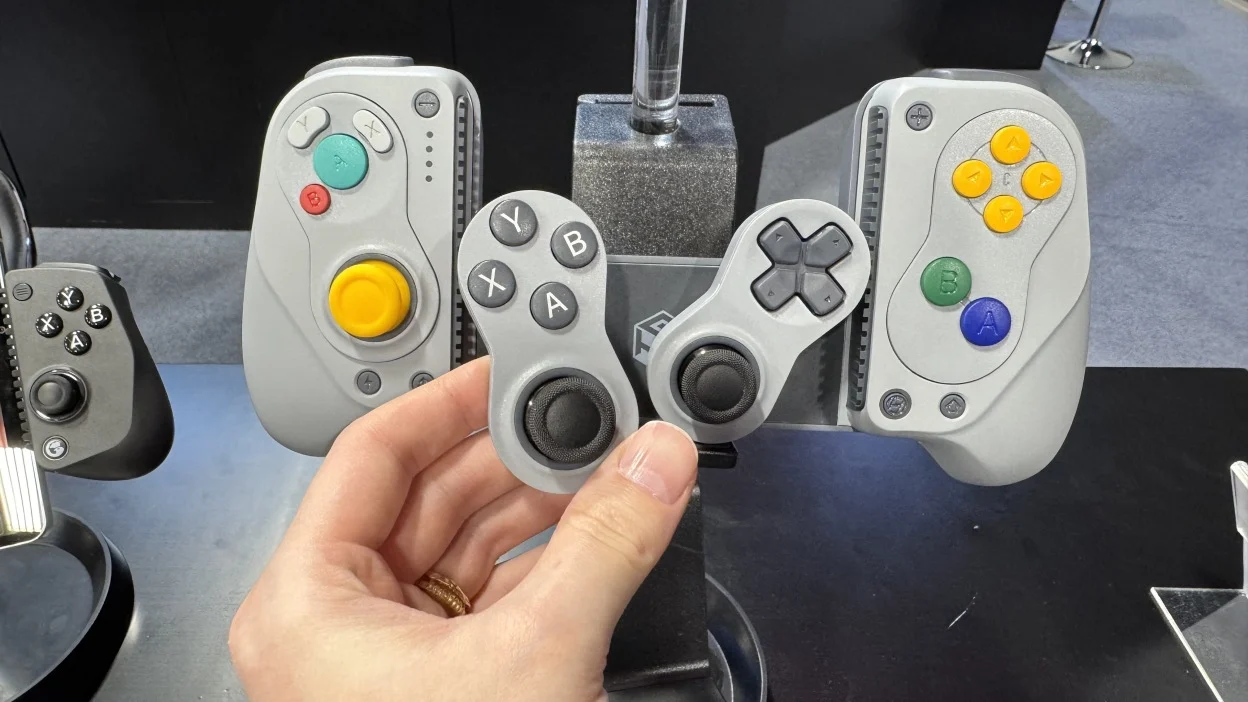



When people think about games designed for memory, crossword puzzles, trivia and traditional brain-training exercises may come to mind. Happy People Games wants to expand... Read more

Lorem ipsum dolor sit amet, consectetur adipiscing elit. Ut elit tellus, luctus nec ullamcorper mattis, pulvinar dapibus leo.
Lorem ipsum dolor sit amet, consectetur adipiscing elit. Ut elit tellus, luctus nec ullamcorper mattis, pulvinar dapibus leo.